
Home Air Purifier Repair & Maintenance | Technical Sewa
Home Air Purifier Repair and Maintenance Guide
A dirty or broken air purifier does not just stop working; it can actually worsen indoor air quality. Dust, mold, and trapped particles build up inside a neglected device and get pushed back into the room you are trying to clean.
Most air purifier problems, however, are easier to fix than people think. Weak airflow, bad smells, strange noises, and filter warning lights all have clear causes and simple solutions, most of which you can handle at home in under 30 minutes.
Whether you own a Xiaomi, Dyson, Philips, LG, or Sharp air purifier, the steps for proper home air purifier repair and maintenance are the same. Read through, and you will know exactly what to do and when to call a professional.
What Is an Air Purifier and How Does It Work?
An air purifier is a device that cleans the air inside your home. It pulls in dirty air, filters out harmful particles, and pushes out clean air. Simple as that.
But does an air purifier really work? Yes, when it is well-maintained. A poorly maintained purifier can actually spread dust and bad smells instead of removing them. That is why air purifier maintenance matters so much.
Main Components of an Air Purifier
Understanding the parts helps you take better care of your device.
HEPA and Carbon Filters
These are the heart of any air purifier. The HEPA filter traps tiny dust, pollen, and smoke particles. The carbon filter removes bad smells and gases. Both need regular cleaning or replacement to keep working properly.
Sensors and Airflow Systems
Modern air purifiers have air quality sensors that detect pollution levels and adjust fan speed automatically. The fan and motor pull dirty air in and push clean air out. When these parts get dusty, the whole system slows down.
Benefits of Air Purifiers for Indoor Air Quality
A well-maintained air purifier gives you:
- Cleaner indoor air free from dust, pollen, and smoke
- Fewer allergy and asthma triggers for your family
- Better sleep and breathing, especially for children and elderly people
- Protection from Kathmandu air pollution, which is among the worst in South Asia during winter
A good air purifier can capture airborne dust, smoke, and bad smells that make people sneeze or experience problems in the nose and lungs. Regular maintenance helps the machine work more efficiently every day.
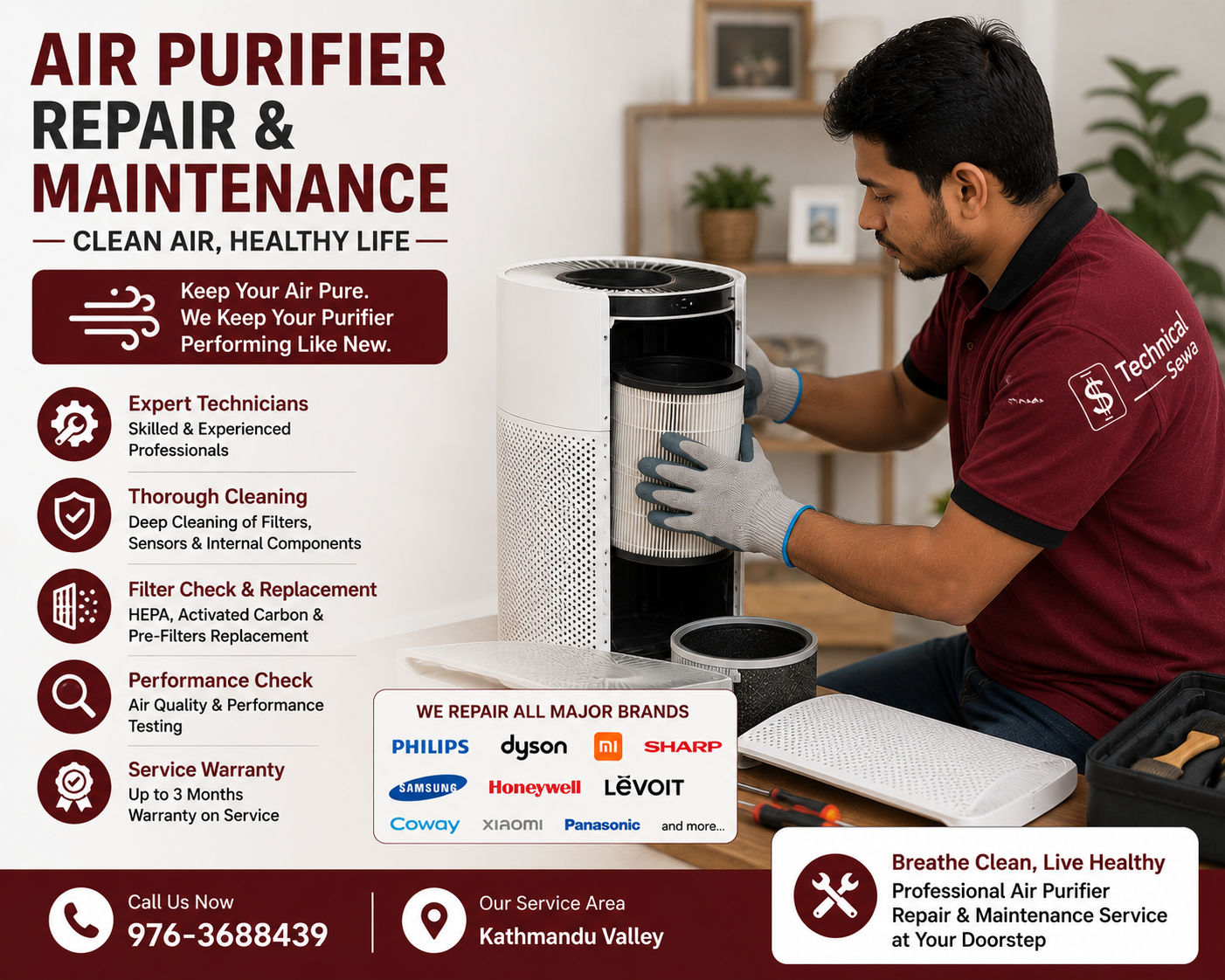
Why Regular Air Purifier Maintenance Is Important?
Think of your air purifier like a car. If you never change the oil or clean the filter, the engine breaks down. The same happens with your purifier. Regular air purifier maintenance keeps it working at full power and saves you money on repairs.
Improving Purifier Performance
A dirty filter blocks airflow. When airflow drops, your purifier works harder but cleans less. Routine air purifier servicing, even just wiping the outside and checking the filter, can bring back full performance in minutes.
Dirty or moisture-damaged filters can reduce airflow, increase strain on the purifier, and lower overall filtration performance.
Extending Filter and Motor Lifespan
Air purifier filters can cost NPR 2,000 to NPR 10,000 or more to replace. Regular cleaning extends their life by months. The motor lasts longer, too, because it does not have to fight a clogged filter.
Reducing Dust and Pollution Indoors
Indoor air quality is often 2 to 5 times worse than outdoor air. Cooking smoke, dust mites, pet hair, and mold spores build up inside. A clean, well-serviced air purifier for home use removes these pollutants before they cause health problems.
Importance During Kathmandu Pollution Season
Kathmandu air pollution is a serious problem, especially from October to February. PM2.5 levels can reach dangerous highs due to vehicle emissions, brick kilns, and crop burning. An air purifier is one of the best indoor air quality solutions in Nepal, but only if it is properly maintained. During pollution season, filters can clog twice as fast, so check them every two to three weeks.
Signs Your Air Purifier Needs Repair
Sometimes, cleaning is not enough. Here are the warning signs that your air purifier needs more than just a wipe-down.
Weak Airflow or Bad Odor
What it means and what to check:
- Weak airflow usually means the filter is clogged or the fan motor is failing.
- A bad smell from the purifier usually means the carbon filter is saturated and needs replacement, not just cleaning.
Unusual Noise or Overheating
This is one of the most common air purifier troubleshooting complaints:
- Rattling or vibrating sounds mean something is loose inside, or the filter is not seated properly.
- The grinding or humming of the fan motor may be worn out.
- Overheating may be caused by blocked vents or a failing motor. Turn it off immediately to avoid a fire hazard.
Filter Warning Light Issues
Most modern purifiers, including Xiaomi and Philips models, have a filter indicator light. If the light stays on after you clean or replace the filter, you may need to reset the filter timer manually. Check your user manual for the reset steps. If the light still does not go off, the sensor itself may be faulty.
Power and Sensor Problems
These problems need professional air purifier repair:
- The device does not turn on at all, which could be a blown fuse or a damaged power board.
- The air quality sensor always reads poor, or a good sensor may need cleaning or replacement.
- Random shutdowns, overheating, or an internal electrical fault.
Air Purifier Cleaning and Maintenance Step-by-Step
This is the core of DIY air cleaner maintenance. Follow these steps carefully, and you will keep your device in top condition.
Step 1: Safety Steps Before Cleaning
- Turn off and unplug the air purifier. Never clean a plugged-in device.
- Wait 15 to 20 minutes after turning it off before opening.
- Work in a ventilated area, because dirty filters release trapped dust when removed.
Step 2: Cleaning the Exterior and Air Vents
What you need: a dry or slightly damp soft cloth, a small brush, or a vacuum with a brush attachment.
- Wipe the outer casing with a soft, damp cloth. Do not use chemical cleaners.
- Use a small brush or vacuum to clean the air intake vents. These get very dusty.
- Check the air outlet on top or the side. If it is blocked, airflow will suffer.
Step 3: Cleaning or Replacing Filters
This is the most important part of purifier care. Follow the steps for each filter type.
Pre-Filter Cleaning
The pre-filter is the first layer. It catches large dust, hair, and pet dander.
- Remove the pre-filter from the unit.
- Gently vacuum off the loose dust using a soft brush attachment.
- If your pre-filter is washable (check your manual), rinse it under cool running water and let it dry completely at least 24 hours before putting it back.
- Clean the pre-filter every 2 to 4 weeks, especially in dusty areas like Kathmandu.
Step 4: HEPA Filter Maintenance
HEPA filter cleaning is a topic many people get wrong. Here is the truth:
- Most true HEPA filters cannot be washed. Water destroys their microscopic fibers.
- You can gently tap the filter over a bin to remove loose dust, or use a vacuum on low suction from the outside.
- Air purifier filter replacement is the only real solution once a HEPA filter is fully saturated. Most last 6 to 12 months, depending on use.
- Always check your brand's manual. Xiaomi air purifier and Philips air purifier filters have specific replacement cycles printed in the app or manual.
Step 5: Carbon Filter Care
The carbon filter absorbs gases, odors, and VOCs (volatile organic compounds).
- Carbon filters cannot be cleaned. Once saturated, they must be replaced.
- You will know it is time when it smells like cooking smoke, or chemicals pass through unchanged.
- Most carbon filters last 3 to 6 months under heavy use.
Step 6: Cleaning Sensors and Internal Components
Dirty sensors give wrong air quality readings. Here is how to clean them:
- Locate the sensor port, usually a small opening on the side. Check your manual.
- Use a cotton swab dipped in isopropyl alcohol to gently clean the sensor lens.
- Let it dry completely before reassembling.
- Clean sensors every 3 months as part of your routine air purifier servicing schedule.
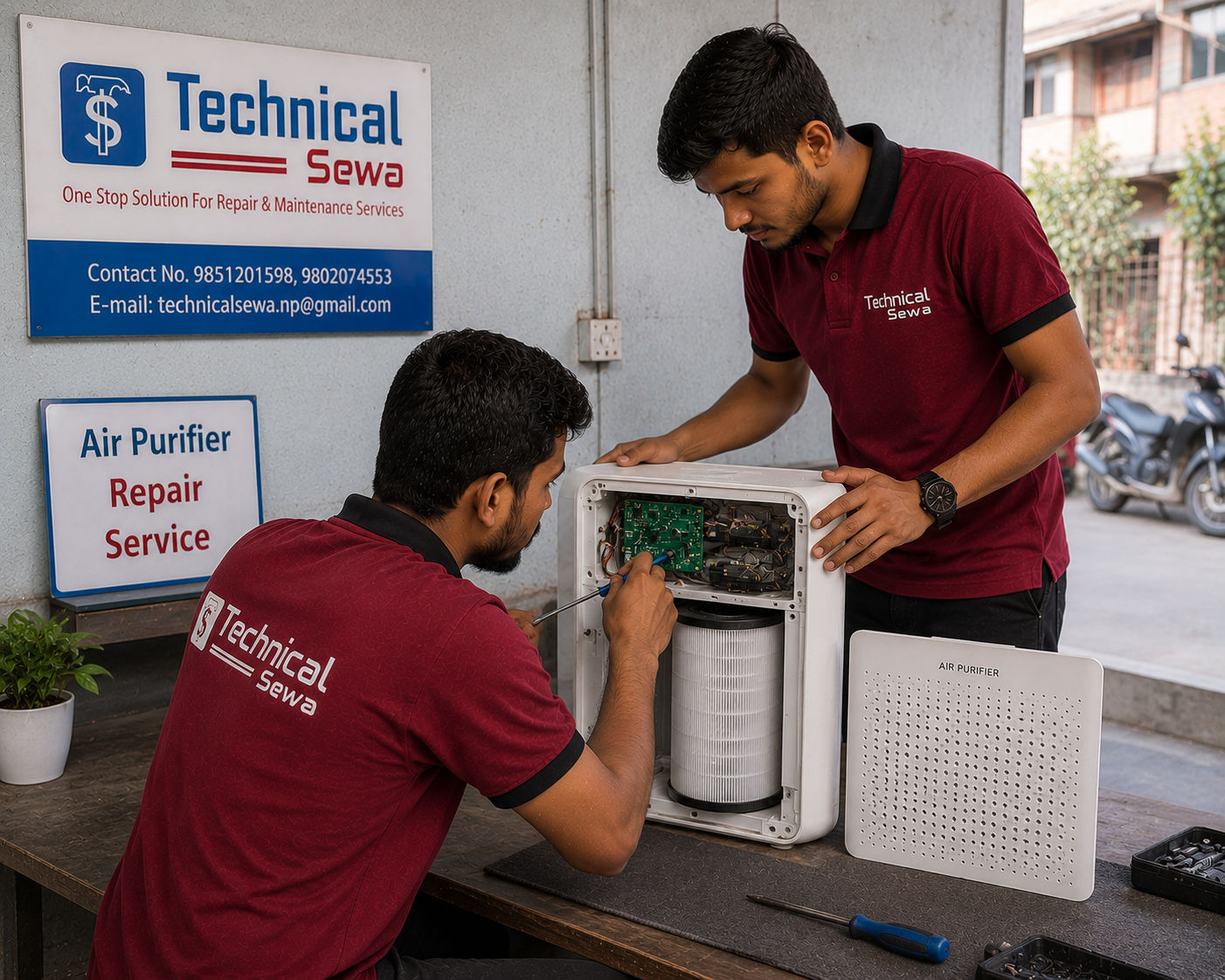
Common Air Purifier Problems and Troubleshooting Tips
These are the most common air purifier problems people face. Most have simple fixes.
Air Purifier Not Working Properly
- Problem: Low or no airflow. Fix: Clean or replace the pre-filter and HEPA filter.
- Problem: Device not turning on. Fix: Check the power cable, reset the unit, or call air purifier repair support.
- Problem: The filter light stays on after replacement. Fix: Reset the filter timer in the settings or app (Xiaomi, LG air purifier, and Philips models all have this option).
Poor Odor Removal Performance
If your purifier is not removing smells, there are two likely causes:
- The carbon filter is full and needs replacement. This is the most common reason.
- The purifier is too small for the room. Always match the device's CADR (Clean Air Delivery Rate) to your room size.
Excessive Noise During Operation
- Rattling: The filter or cover is loose. Open it, reseat the filter, and close the panel firmly.
- Grinding: Something is stuck in the fan. Turn off, unplug, and inspect the fan area.
- High-pitched hum: The motor bearing may be worn. This requires professional air purifier repair.
DIY Troubleshooting vs Professional Repair
Knowing when to call for help saves time and money.
- DIY: Filter cleaning and replacement, exterior cleaning, sensor cleaning, and filter timer reset.
- Professional repair: Motor replacement, circuit board issues, sensor replacement, and power failures.
Serious motor, electrical, or sensor issues should be handled by trained technicians to avoid further damage and ensure safe repair.
Air Purifier Maintenance Tips for Homes in Nepal
Nepal's environment, especially in Kathmandu, is very different from places where most air purifiers are designed and tested. Here are specific indoor air device servicing tips that work for our conditions.
Managing Kathmandu Dust and PM2.5 Pollution
Kathmandu air pollution includes high PM2.5 levels from traffic, construction, and seasonal burning. This puts extra strain on air purifier filters.
- Clean your pre-filter every 2 weeks during pollution season (October to February).
- Replace HEPA filters every 4 to 6 months instead of the standard 12 months during high-pollution months.
- Use the highest fan setting when AQI (Air Quality Index) alerts are issued for your area.
Best Placement for Air Purifiers
- Place it in the room where you spend the most time, usually the bedroom or living room.
- Keep at least 50 cm of open space around the device so air can flow freely.
- Do not place it in corners or behind furniture, as this blocks airflow badly.
- For Kathmandu air pollution solutions, place the purifier near windows or doors that face the main road.
Maintenance During Winter and Dry Seasons
In Nepal, winter brings both more pollution and drier air. This affects your purifier in two ways:
- Dry air makes dust float longer, so filters clog faster. Check filters more often.
- Cold temperatures can reduce sensor accuracy. If the AQI reading seems wrong, clean the sensor first.
Always switch off the air conditioner and purifier before cleaning filters or internal parts for safety. Always switch off the AC and purifier before cleaning filters or internal parts for better safety.
Why Choose Technical Sewa for Air Purifier Repair and Maintenance?
Technical Sewa provides professional home air purifier repair and maintenance support across Kathmandu Valley. Our technicians service major brands, including Xiaomi, Dyson, Philips, LG, and Sharp, with careful diagnostics, filter servicing, and repair assistance. Whether your purifier needs cleaning, filter replacement, or technical troubleshooting, our team focuses on safe service, transparent support, and reliable home solutions.
Contact Technical Sewa for home air purifier repair and maintenance assistance in Kathmandu.
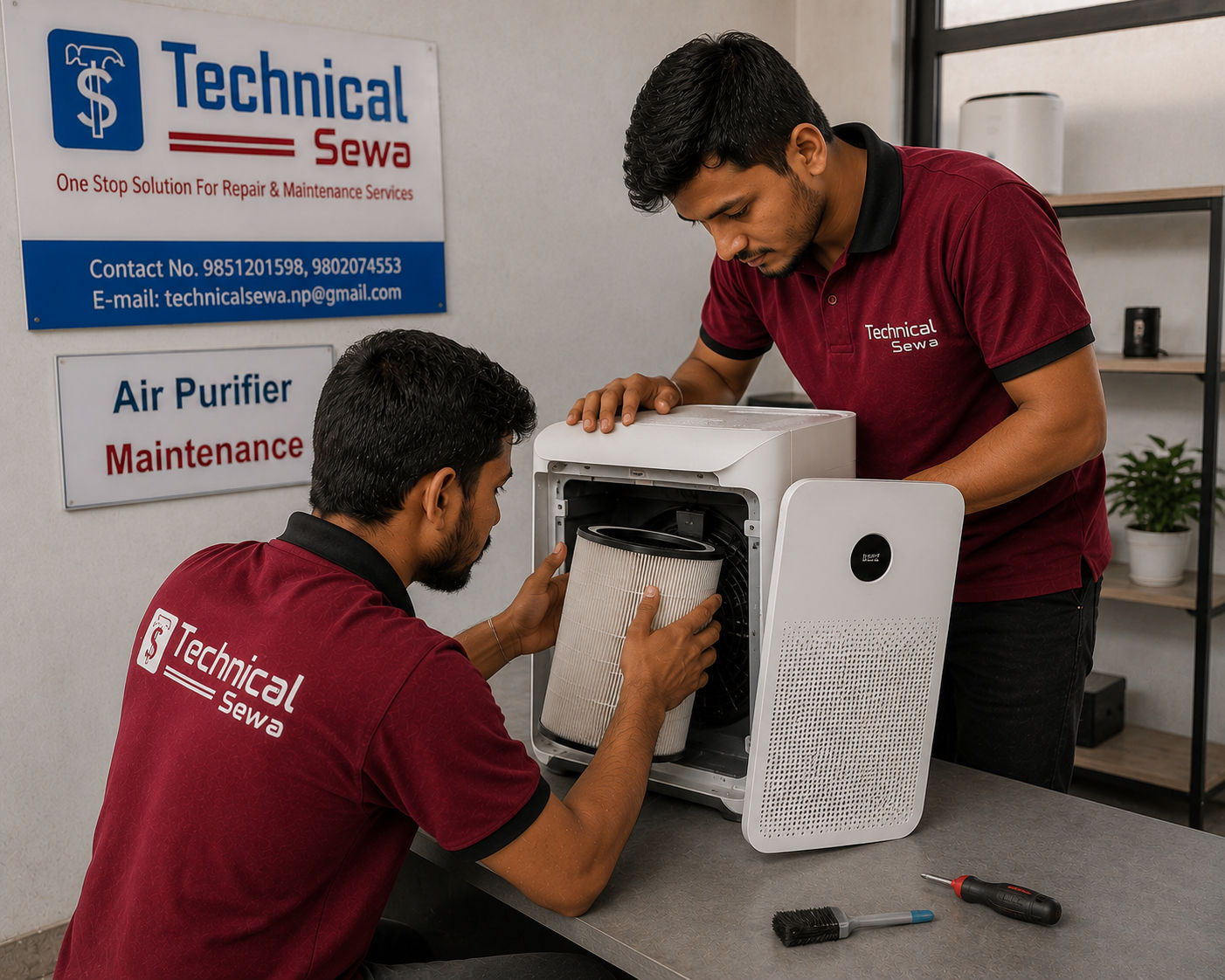
Air Purifier Types We Service
- Activated Carbon Air Purifiers
- Central Air Cleaners
- Ionic Air Purifiers
- Electronic Air Cleaners
- HEPA Air Purifiers
- Ultraviolet Air Purifiers
Popular Brands We Repair
- Samsung
- Whirlpool
- IFB
- Electrolux
- Skyworth
- Beko
- Hisense
- LG
- Videocon
- TCL
- Toshiba
- Nikai
- Daisuke
- JBL
- Admiral
- Haier
- Sony
Popular Service Locations
Final Thoughts
Regular maintenance helps an air purifier perform efficiently and last longer. A few simple steps every month keep it running well for years. You protect your family's health, save money on repairs, and get cleaner indoor air, all from 20 minutes of care each month.
If your air purifier needs more than a basic clean, Technical Sewa is here to help. We provide fast, reliable air purifier home service across Nepal, with genuine parts and trained technicians. In Kathmandu's high-pollution environment, regular air purifier maintenance plays an important role in maintaining indoor air quality. Technical Sewa provides professional air purifier home service across Kathmandu Valley.
Contact Technical Sewa and Solution for more info:
Contact No: 9851201580, 9802074555, 015970066
Email: technicalsewa.np@gmail.com
Location: Kumaripati, Lalitpur, Nepal
FAQs
Q: How often should I clean my air purifier?
A: Clean the pre-filter every 2 to 4 weeks and wipe the outside every week. Clean the sensors every 3 months. During the Kathmandu pollution season, you may need more frequent air purifier maintenance to keep indoor air quality clean.
Q: Can HEPA filters be washed?
A: No, most HEPA filters should not be washed because water damages the tiny fibers inside. You can gently vacuum the filter, but dirty HEPA filters must be replaced. Only washable pre-filters can be cleaned with water.
Q: Does an air purifier really work?
A: Yes, air purifiers can effectively remove dust, smoke, pollen, and airborne particles when maintained according to manufacturer guidelines. It helps remove dust, smoke, pollen, and allergens from indoor air. Regular air purifier maintenance keeps the purifier working efficiently.
Q: How long do air purifier filters last?
A: HEPA filters usually last 6 to 12 months, while carbon filters last 3 to 6 months. Pre-filters may last 1 to 3 months, depending on dust levels. In Kathmandu, filters may need replacement sooner because of high pollution.
Q: Is professional servicing necessary?
A: Basic air purifier maintenance, like cleaning filters and wiping the unit, can be done at home. But motor issues, sensor problems, and electrical repairs need professional air purifier repair. Technical Sewa provides air purifier home service across Kathmandu Valley.
Q: Why is my air purifier making noise?
A: Noise can happen because of a loose filter, a dirty fan, or a worn motor. First, check and clean the filters and fan carefully. If the sound continues, the purifier may need professional repair.
Q: How do I know when to replace the filter?
A: Many air purifiers from Xiaomi, Philips, and LG have filter replacement indicators. If not, check the filter every month for dirt and color changes. A dark or clogged HEPA filter should be replaced immediately.
Q: Can I run my air purifier 24 hours a day?
A: Yes, most home air purifiers are made to run all day and night. This is very useful during the Kathmandu pollution season. Just remember that continuous use needs regular filter checks and air purifier maintenance.
Q: What happens if I do not clean my air purifier?
A: A dirty air purifier can spread dust, bad smells, mold, and bacteria into your home. The motor may also become damaged from overworking. Regular air purifier maintenance helps keep indoor air clean and safe.
Q: Where can I get air purifier repair service in Nepal?
A: Technical Sewa offers air purifier home service across Kathmandu Valley. They repair brands like Xiaomi, Dyson, Philips, LG, and Sharp. Their technicians handle filter replacement, cleaning, and full air purifier repair services.